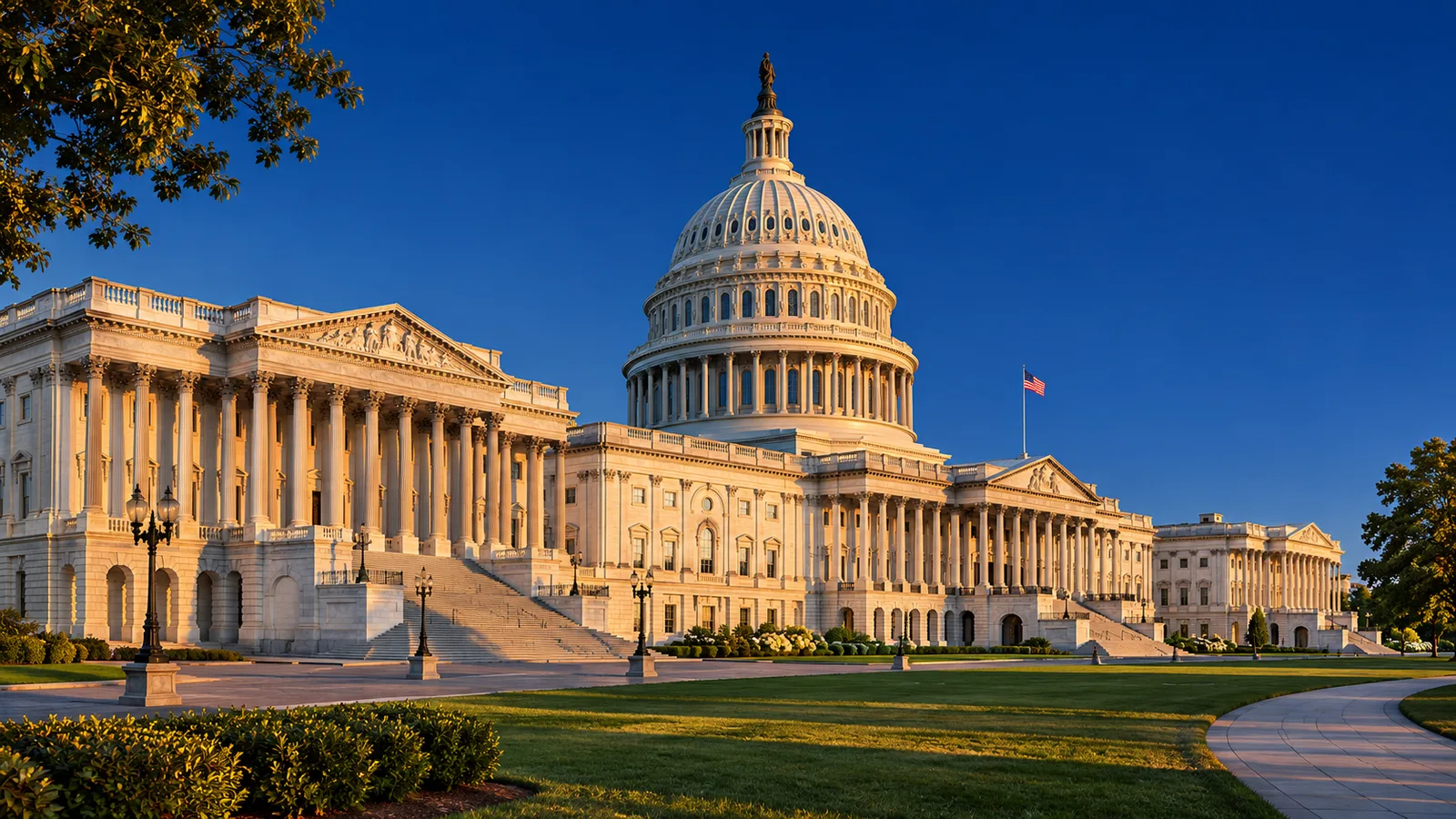
A federal appeals court, the 5th US Circuit Court of Appeals, ruled on Friday, November 20, 2026, that the House unconstitutionally passed a $1.7 trillion government funding bill in 2022 through a pandemic-era proxy voting rule. In Texas v. Blanche, the en banc court concluded that the proxy voting rule the House adopted during the COVID-19 pandemic violated the Quorum Clause. The court affirmed the judgment of the district court.
The court's reasoning
The Fifth Circuit held that the House proxy voting rule violated the Quorum Clause, which the court said requires a majority of House members to be physically present to pass legislation. It concluded that the Act's passage was unconstitutional because the clause does not allow proxies to be included when establishing a quorum. The court stated that Members of Congress must be present for quorum purposes, and that the Supreme Court expressly held this over 125 years ago. Judge Cory Wilson wrote the majority opinion. Wilson, a Trump appointee, wrote that the Quorum Clause's constraints on congressional power cannot be circumvented by congressional fiat, while chambers have much discretion over their rules of procedure. He also wrote that proxy presence does not count toward a quorum.
The spending bill
The Consolidated Appropriations Act of 2023 was passed by the House using a proxy-presence rule to establish a quorum, with hundreds of otherwise absent Members counted as present by proxy. The bill passed the House on a 225-201 vote, with 226 members voting by proxy, as reported. The en banc court held that lawmakers unconstitutionally passed the spending package when members voted on it by proxy. The ruling states that remote voting by the House violated the Constitution.
Narrow relief for Texas
Texas sought injunctive relief against only one portion of the act, the Pregnant Workers Fairness Act. The ruling applies only to Texas' challenge to that federal law requiring accommodations for pregnant employees. The relief barred the Department of Justice and the Equal Employment Opportunity Commission from enforcing the pregnant workers provision against Texas.
Dissent and next steps
Judge James Graves Jr., in a dissent, questioned how the ruling's scope could be limited, given that the challenged law is part of a multi-trillion dollar bill. According to the dissent, the act is a $1.7 trillion government funding bill. The ruling could lead to other challenges to the fiscal 2023 spending package, and the decision is certain to be appealed to the Supreme Court.