In 1960, the journal Science published an article titled "Doomsday: Friday, 13 November, A.D. 2026." University of Illinois physicist Heinz von Foerster predicted in that paper that Nov. 13, 2026, would be doomsday. The article predicted that on that Friday the human population would approach infinity and effectively annihilate itself. Humanity did not end on November 13, 2026, and the article, published on that date, states that humanity is still here.
The 1960 paper and its authors
The article was authored by Heinz von Foerster, Patricia M. Mora, and Lawrence W. Amiot. It includes lengthy analysis of population and food estimates to reach its conclusions. Von Foerster argued that human population would keep accelerating toward infinity. The authors argued that human populations are exceptional and might grow beyond an exponential rate, at an ever-increasing one.
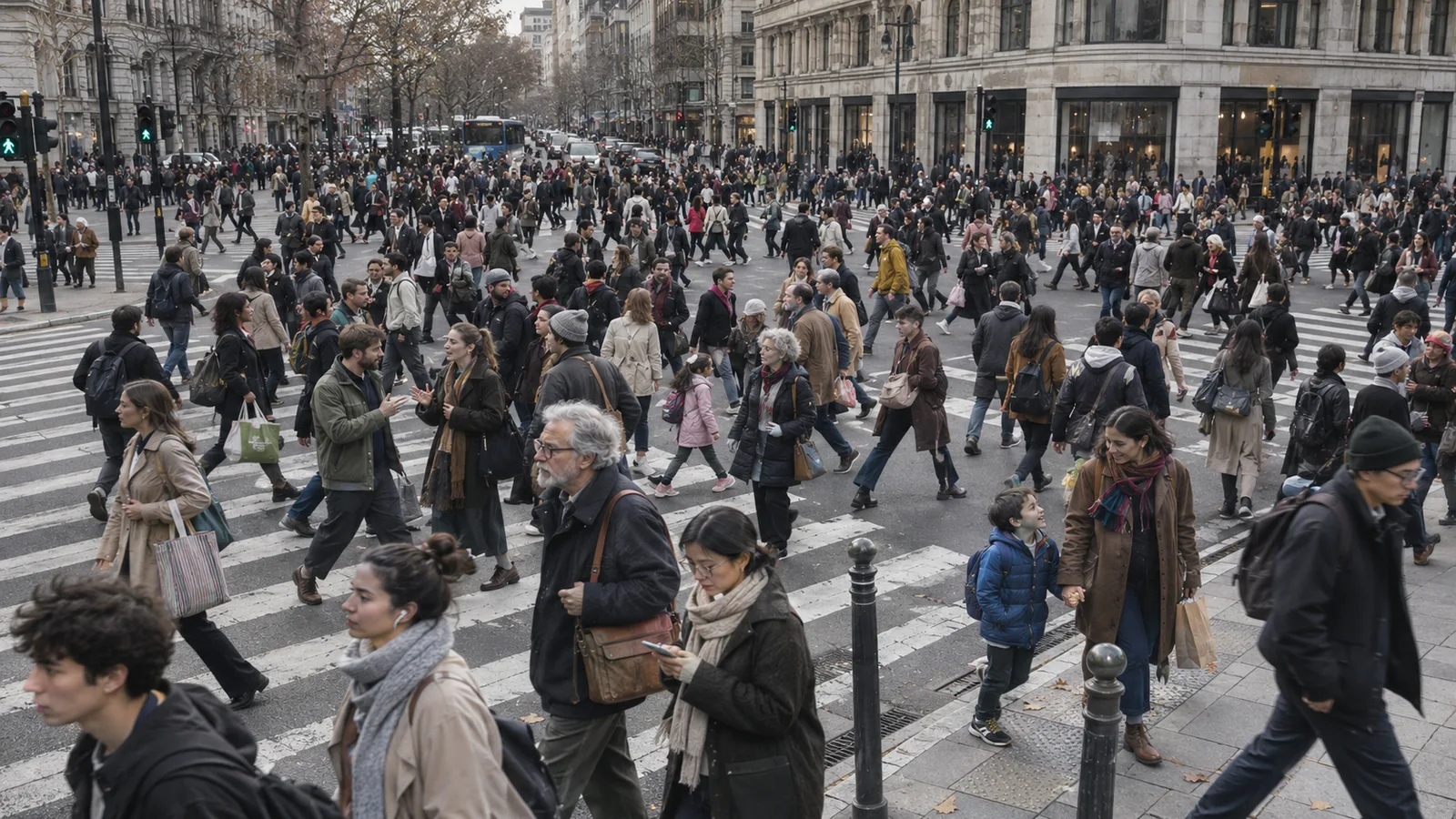
The predicted doomsday was tied to overcrowding from population growth, which the article describes as signaling the apocalyptic downfall of civilization. A physicist's paper and its colleagues' analysis thus pointed to a single date.
Why the forecast fell short
The article states that the 1960 doomsday prediction has not come to pass and that the rate of population growth has declined. It describes the prediction as inaccurate because population growth has slowed and birth rates are declining in regions globally. Around 1993, the accuracy of the paper's projections began to falter, and the global population began falling behind its forecasts. The article attributes this to the world doing what von Foerster and his colleagues recommended.
As of the article's writing, the global birth rate was slightly less than half its 1960 level. The article gives replacement fertility as about 2.1 children per woman, the rate demographers use to denote where a population replaces itself from one generation to the next. According to the article, agriculture has generally kept up with the need to feed a growing population.