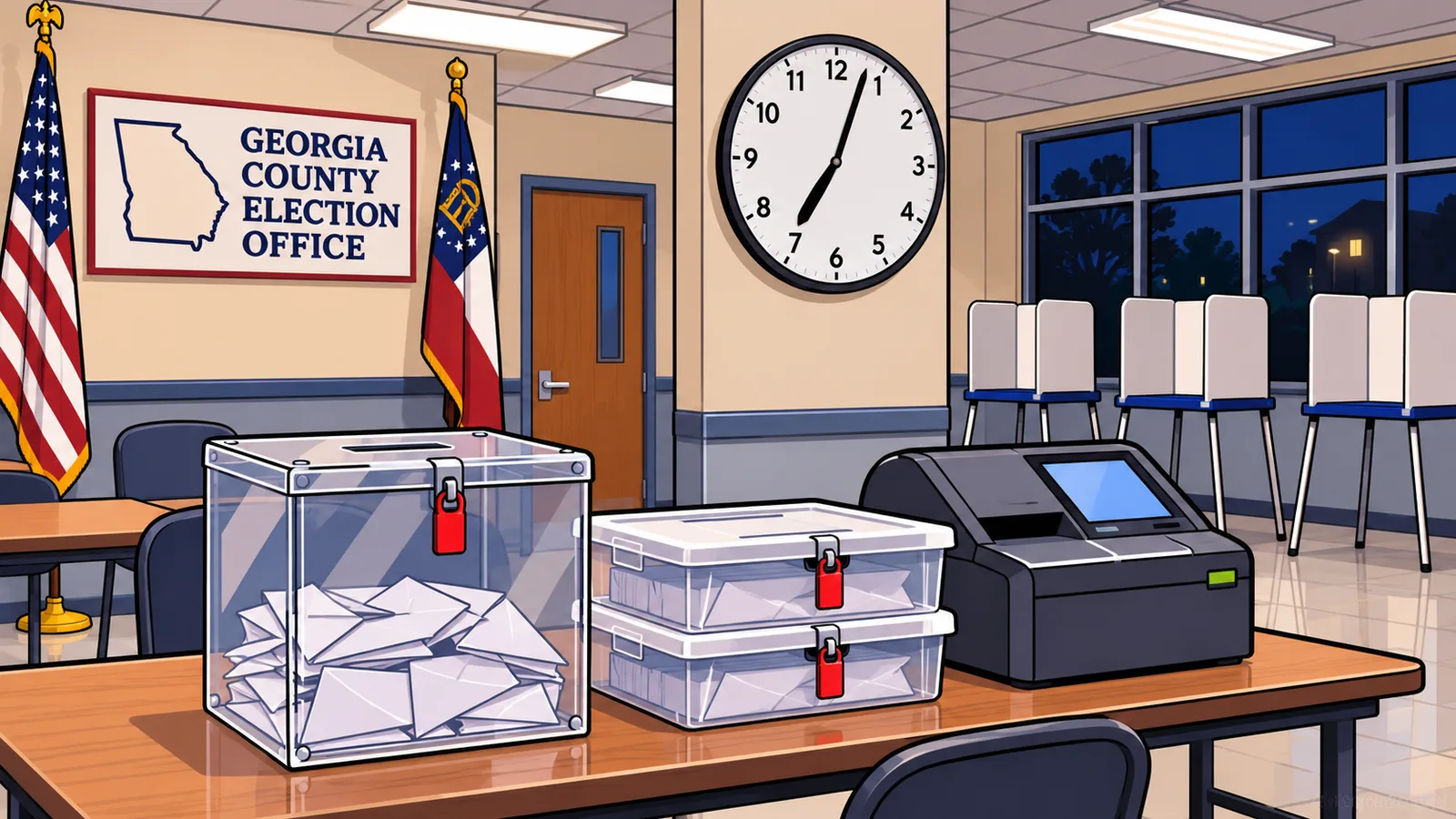
Georgia polls close at 7 p.m. on Election Night, but the count arrives in waves. Early in-person and pre-scanned absentee votes come first, Election-Day ballots follow, and provisional, military and overseas ballots can take days. Election night totals are unofficial.
Georgia polls close at 7 p.m. on Election Night, but winners are not declared right away because the count arrives in waves. Officials say the delay is caused by the process, not a glitch, with bipartisan teams handling key steps, ballots moved in sealed transport, and workers maintaining a paper trail. Raffensperger said a provision of a state bill passed in 2021 requires counties to report their results one hour after polls close.
The first wave: early and absentee votes
Under Georgia Code §21-2-386, workers can open, verify and scan absentee ballots before polls close, but the law bars them from tabulating or releasing results until after 7 p.m. The first wave of results, dropped by counties shortly after 7 p.m., includes early in-person votes plus absentee ballots that election workers already verified and scanned.
The second wave: Election-Day ballots
The second wave holds Election-Day ballots. It takes longer because officials seal memory cards from precinct scanners, transport them under chain-of-custody to the county office, then upload them into the official system. Large urban counties often have significantly more ballots to process than smaller rural counties, and smaller rural jurisdictions may report results earlier because they have fewer ballots.
The final wave can take days
The final wave can take days because officials must still verify provisional ballots and count cured provisionals and military and overseas ballots postmarked by Election Day. The law allows officials to count military and overseas ballots if they arrive within three days, meaning the Friday after a Tuesday election.
Projections and unofficial totals
Election night totals are unofficial, and every vote must be counted by law, including provisional, overseas, mail-in and military ballots, provided they meet eligibility and deadline requirements. News organisations project winners using reported vote totals and other election data, and these projections are not official certifications. A race call is a news organization's determination of the winner based on its analysis of reported results and outstanding votes, and it does not replace the official canvass and certification.
Rules differ across states
US states have different rules on when election officials can process and count mail-in ballots: some allow processing before Election Day, while others restrict it until Election Day or after polls close. Some states accept ballots arriving after Election Day, only if they meet the state's postmark and receipt deadlines.