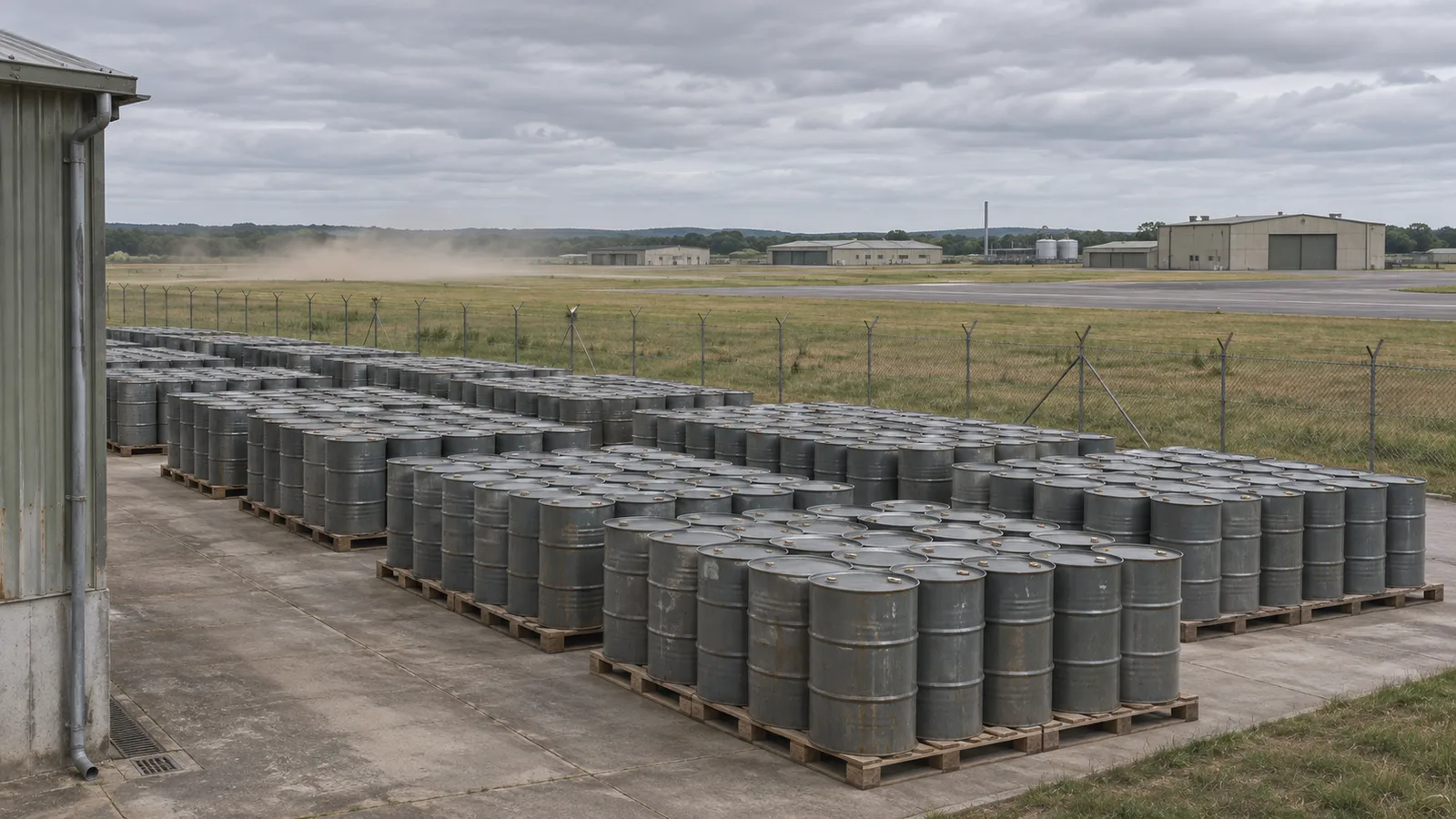
The U.S. Army is preparing to detonate stored lead azide at the ammunition plant in Middletown, Iowa. The Army scheduled an intentional on-site detonation of 68 drums of deteriorated lead azide, an explosive, at the Iowa Army Ammunition Plant for a Friday around noon. The Army is planning two detonations, and it is asking residents of the small Iowa town to evacuate Friday.
Why the Army chose detonation
The Army said the operation is necessary to dispose of degraded lead azide and is allowed by the Environmental Protection Agency. According to the EPA, the lead azide has deteriorated during storage, allowing it to recrystallize and become increasingly sensitive to friction and shock. Stored lead azide becomes highly sensitive as it degrades, and even slight movement could cause it to detonate. The Army says moving or transporting it now poses an unacceptable risk of accidental detonation, and officials determined after evaluating alternatives that detonating in place was the safest available option. The Army said the material cannot safely be handled or moved, so no method other than in-place detonation can treat it. A Defense Department notice said attempting to move the materials would be too dangerous.
Permit
The EPA granted the Army an emergency permit on Nov. 13 for the treatment and storage of lead azide for the operation. According to the notice, the storage and treatment of the lead azide hazardous waste is in a location not covered for treatment, storage, or disposal under the effective federal environmental permit.
Evacuation and expected effects
Residents in Middletown's City Park neighborhood are being asked to temporarily evacuate their homes from 8 a.m. to 2 p.m. on Friday. The request is over concerns about window damage. The Armed Forces Reserve Center in Middletown is open to residents who need a place to go during the detonation. The Army warned that the detonations could damage nearby buildings, including shattering windows. Residents should expect loud explosions, ground vibrations and a visible dust plume. Residents will feel vibrations from two consecutive, rapid detonations, and the dust plume will contain some lead.
Lead dust and guidance
Lead will be released into the air during the detonations. The dust plume containing lead may cross into Illinois. The Army is advising nearby Iowa residents that the plume will carry elevated levels of lead. It recommends either evacuating or avoiding the area, or remaining indoors with windows closed until Army officials give an all-clear notice. Army guidance tells people in the potential air-dispersion area to avoid being outdoors during the Friday detonation, switch heating and cooling systems to recirculate, and keep windows and doors closed.
Cleanup
Army crews are wetting the soil and using a water mist to help keep lead near the detonation site, according to Army public affairs specialist Justine Barati. The Army said crews will clean the area and check nearby soil for contamination after the detonations. For lead particles spread in dust from the explosion, Barati said people should wet or wipe the affected area. The Army advises impacted residents to consider cleaning indoor and outdoor surfaces, such as children's play surfaces and windowsills, after the air exposure period has ended.