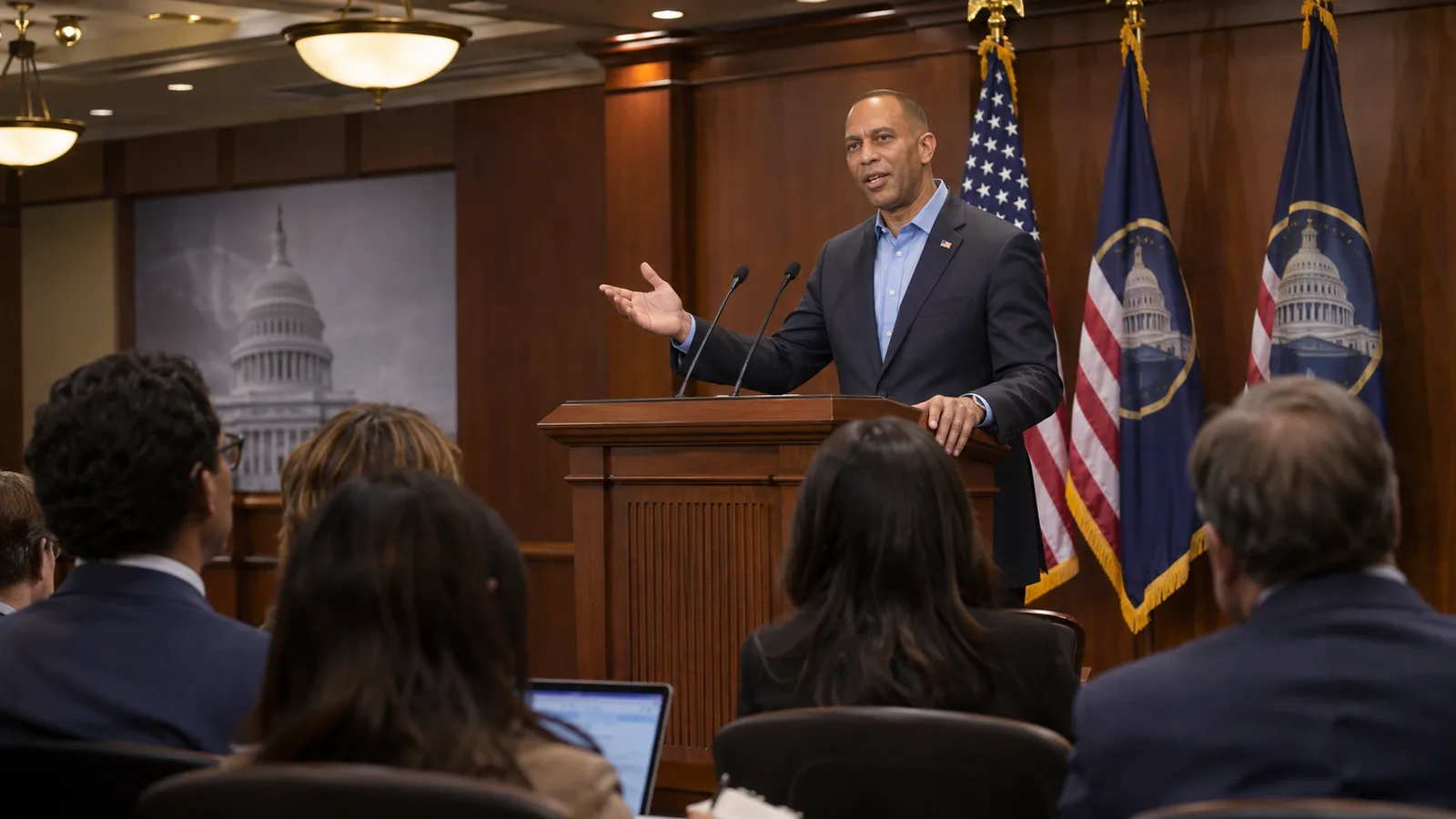
Rep. Hakeem Jeffries of New York easily won the Democratic Party's nomination for speaker of the House on Wednesday, paving the way for his election when Democrats take control of the chamber in January. House Democrats voted behind closed doors to nominate him. The tally was 251 to 11 in a secret ballot, and no challenger ran in the election. No other Democrat put their name forward to directly challenge his bid.
What comes next for the speakership
The speaker is ultimately elected by the full House, in a vote at the beginning of the new Congress. Jeffries still needs to secure 218 votes on the House floor in January, when Democrats are set to hold the majority. His election as speaker is widely expected, and Democrats are projected to hold 259 seats in the next House. If elected, he would be the first Black lawmaker to lead the chamber. The speaker is in the line of succession to the presidency after the vice-president.
Progressive holdouts
Jeffries faced a handful of holdouts from the party's left wing despite overwhelming support. Seven incoming progressive Democrats confirmed they voted against him: Claire Valdez and Darializa Avila Chevalier of New York, Adam Hamawy of New Jersey, Frederick Haynes of Texas, Melat Kiros of Colorado, Donavan McKinney of Michigan, and Chris Rabb of Pennsylvania. After the vote, seven of the 11 Democrats who voted against Jeffries issued a joint statement explaining their position. They said they had been negotiating with Jeffries over the party's agenda and had made progress, but were not yet satisfied with the commitments they had received.
The lawmakers said there is still work to be done to ensure the party's direction reflects what constituents are demanding of its leadership. They cited Medicare for All, stopping ICE terror, getting money out of politics, and ending the genocide in Gaza as issues on which their constituents had given them a mandate.
The format of the vote
Jeffries announced the secret-ballot format on Tuesday, after some of his allies had favored nominating him by acclamation without a formal tally. He said he wanted a tallied vote rather than acclamation, the same approach Democrats used in their 2018 leadership elections. He asked for a recorded vote so rank-and-file members could voice their support or opposition, though the ballot itself was secret.
Other leadership posts
The caucus voted to elevate Rep. Katherine Clark of Massachusetts to majority leader, the No. 2 position. She will be the first woman in either chamber elected to that role. Rep. Pete Aguilar of California was elected majority whip, the No. 3 leader and the party's top vote counter. Rep. Ted Lieu of California won the vote for chair of the Democratic caucus.
Background
Jeffries succeeded Nancy Pelosi as House Democratic leader in January 2023, becoming the first Black person to lead either party in Congress after Republicans took the House in the 2022 midterms. In the Senate, Sen. Chris Van Hollen of Maryland has launched a bid to replace Chuck Schumer of New York as Democratic leader, while Schumer appears likely to keep the post.