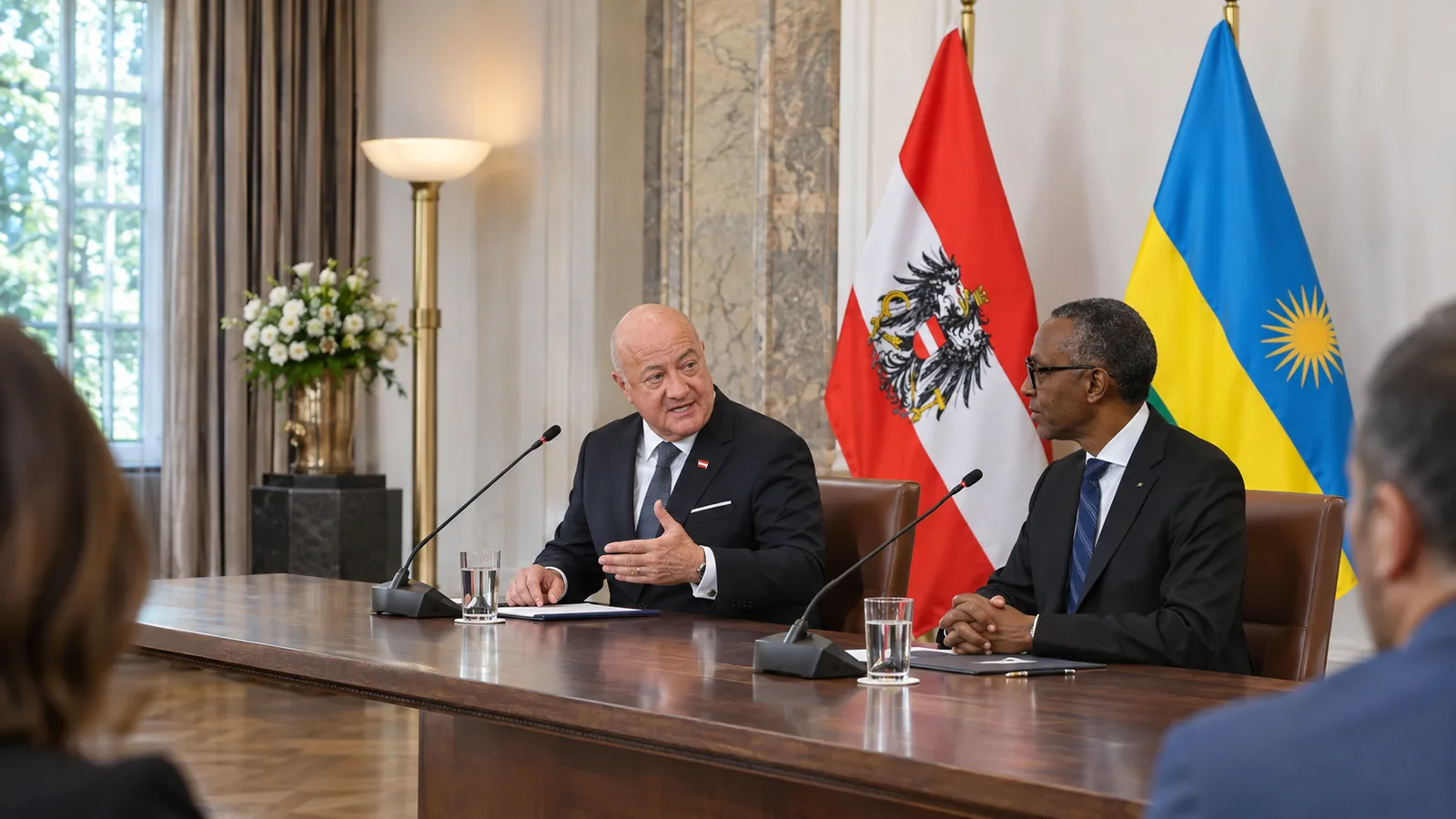
Five European countries (Germany, Austria, the Netherlands, Greece and Denmark) announced a plan on a Monday to send rejected asylum seekers to Rwanda. The plan was spearheaded by Austria, Denmark, Germany, Greece and the Netherlands. According to statements from the Dutch and Danish governments, the hub is expected to be ready to accept transfers in 2027. The planned scheme is still being negotiated with Rwanda, and the plan is described as not yet finalized. The deal follows a recent EU reform that allowed for the creation of hubs outside the bloc.
Who would be sent
The five countries say the plan will focus on migrants who have exhausted their legal avenues for staying in Europe rather than on those just starting asylum claims. The scheme would apply to migrants staying illegally in their nations who are subject to deportation. According to the Dutch government, the five countries will only return single men in the first phase. Unaccompanied children should not be sent to a return hub, and the Dutch government has confirmed this will not take place. Diplomatic sources told AFP the hub is expected to start as a pilot hosting about 100 people, with each country possibly sending about 20 migrants.
What Rwanda and the governments say
Rwandan Interior Minister Vincent Biruta said people who arrive would be offered the chance to return voluntarily to their countries of origin, integrate into Rwandan society, or relocate to another place where they have a legal right to reside. He also said Rwanda would bring on board organizations such as the U.N. refugee agency, with an independent monitoring mechanism to address refugees' human rights. Biruta said Rwanda would give a second chance to people who have no right to stay in Europe. He added that Rwanda is committed to working with European partners on a safe, legal and dignified solution for migrants. According to the Dutch government, the hub will provide an alternative if deportees cannot be returned to their country of origin. The Dutch government's focus for the Netherlands will be on persons from countries of origin in the same region as Rwanda.
The five countries said the plan aimed to deter more people from migrating to Europe. Danish Prime Minister Mette Frederiksen said it would be a game changer for confronting illegal migration and would break down the human smugglers' business model. Austrian Chancellor Christian Stocker said the countries wanted to relieve European asylum systems and stop traffickers arranging deadly Mediterranean trips. The countries insist human rights will be protected, and they say deportations could bring benefits including discouraging future immigrants. They also say the plan is in line with EU and international law.
Comparison with the UK plan
German Interior Minister Alexander Dobrindt said the European plan is not comparable to the UK plan, because the UK planned to outsource asylum proceedings while this one involves people who have exhausted their appeals. He said only those whose asylum claims are rejected would be sent to Rwanda. The British plan of 2022 was ruled unlawful by judges in London and later abandoned. The UK Supreme Court found Rwanda was not considered a safe third country to which migrants could be sent. The UK deal never took off because of legal challenges and was scrapped by the incoming Labour government in 2024. Downing Street has not ruled out the UK joining the scheme and says it will watch it with interest.
Criticism and rights concerns
Human rights groups criticized the plans, saying EU countries could not guarantee migrants' rights would be respected in Rwanda. A Human Rights Watch researcher said the deal would finance and give political leverage to a government responsible for serious abuses at home and abroad. Clementine de Montjoye of Human Rights Watch said the choice of Rwanda is a concern given its record of repression, arbitrary detention, ill-treatment in detention and support for armed rebels in the Democratic Republic of Congo. The EU Agency for Fundamental Rights argued that any third country hosting a hub should respect fundamental rights, including not sending people where they face serious risk of persecution. Spanish Prime Minister Pedro Sánchez said the plan had no future or humanity, according to AFP.
The International Organisation for Migration could play an ancillary role in the scheme. The IOM said it was in discussions with some EU countries on plans for return hubs or similar mechanisms. The European Border and Coast Guard Agency said almost 110,000 irregular crossings into the EU were detected in the first 10 months of 2026, a 29% decrease from the previous year. About 18,100 crossings were detected in October 2026, about 6% fewer than October 2025 but 22% more than September.