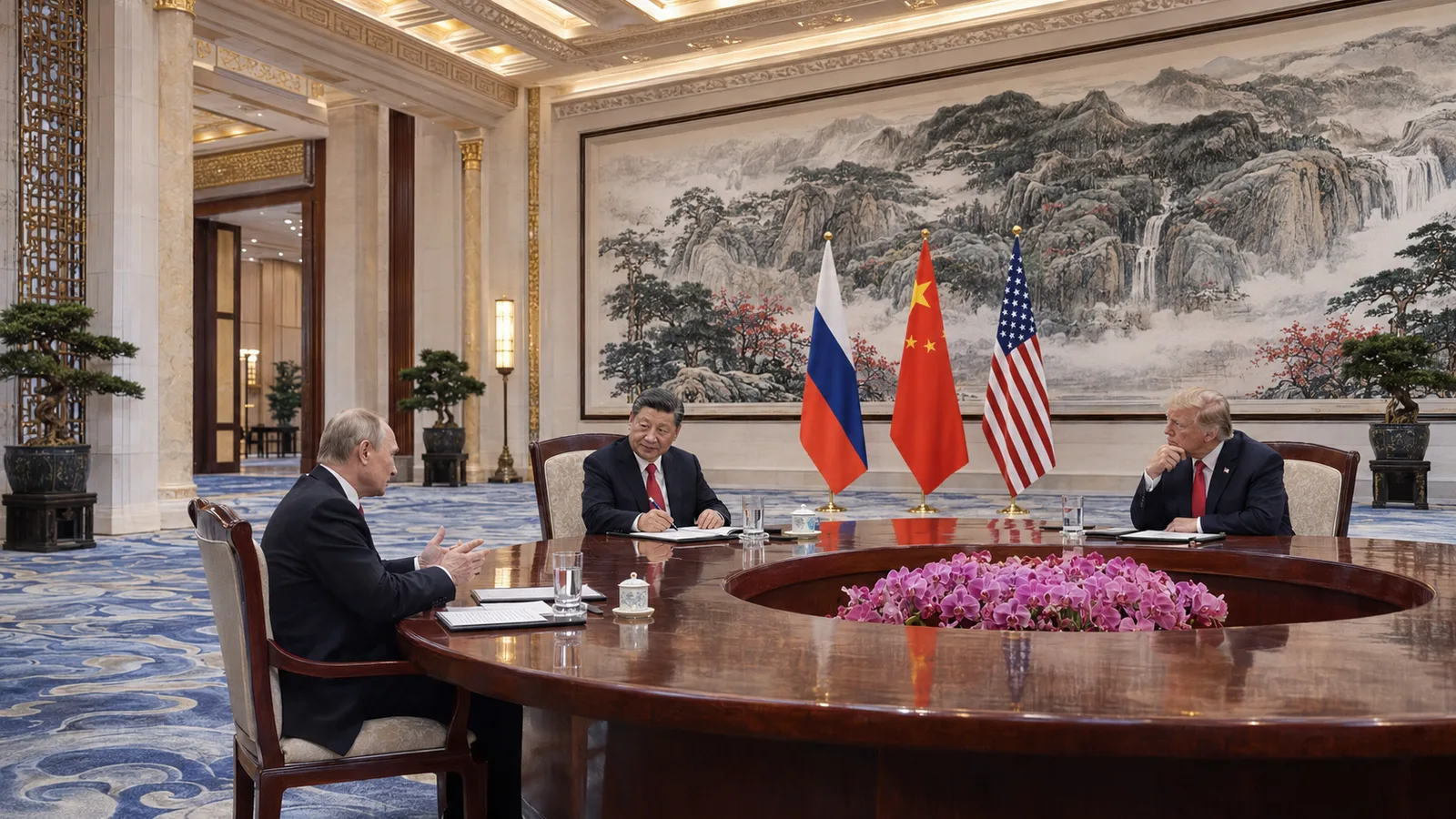
Trump, Xi Jinping and Putin sat down together in Shenzhen, China, on Thursday, Nov. 19, 2026, in a rare face-to-face meeting. It was the first-ever sit-down for the leaders of the three countries. The talks took place on the sidelines of the APEC summit and lasted over an hour. The meeting was held at the Kylin Villa in Shenzhen, Guangdong Province.
Xi greeted Trump personally on the tarmac when Air Force One landed in Shenzhen for the summit. Putin last attended an APEC summit in 2017 and came to Shenzhen as an honored guest. Trump called Putin his friend as he approached him for a handshake. Before the three-way session, Trump told Putin in a one-on-one meeting that a lot of wonderful things could come out of this, or at least start. Trump described the gathering as really making history.
What the declaration says
The peace declaration said the three countries agreed on the need for UN reforms, increased oil supplies and reduced nuclear risks. The statement did not spell out the type and extent of the UN reforms. The leaders reaffirmed that there can be no winners in a nuclear war and that it should never be unleashed. The statement also said the US, China and Russia plan to increase production and supply of refined petroleum products for the benefit of all nations, and the article says this effectively endorses Moscow's beleaguered oil sector.
The statement recognized the principle of state consent and respect for immunities of state officials as being of paramount importance. It also said the International Criminal Court and similar bodies must not abuse their jurisdiction. Putin is wanted by the ICC under an arrest warrant for alleged war crimes in Ukraine. Trump and Putin found common ground in their opposition to the court.
Topics left out
The declaration made no mention of Russia's war in Ukraine or the US-led war in Iran. Kremlin spokesman Dmitry Peskov said Russia's war in Ukraine was not the main topic of the talks. There were no signs that Trump secured any agreements from Xi or Putin to help solve the Iran conflict. China's insistence that it has the right to recover Taiwan, possibly by force, was not addressed in the broadly worded agreement, and China considers the matter a domestic issue.
In a bilateral meeting with Xi, Trump raised the US-led war in Iran and stressed a joint interest in fully reopening the Strait of Hormuz and preventing Iran from acquiring nuclear weapons. Trump said he and Xi agree that Iran needs to fully reopen the strait and cannot obtain a nuclear weapon. Xi said, according to China's Xinhua news agency, that the three nations had aligned views on safeguarding world peace and that the talks were positive and fruitful.
Trump told a Berlin gathering of US envoys, Ukrainian President Zelenskyy and European leaders that he had spoken to Xi and Putin about finding a peaceful end to the Ukraine war, according to Witkoff.