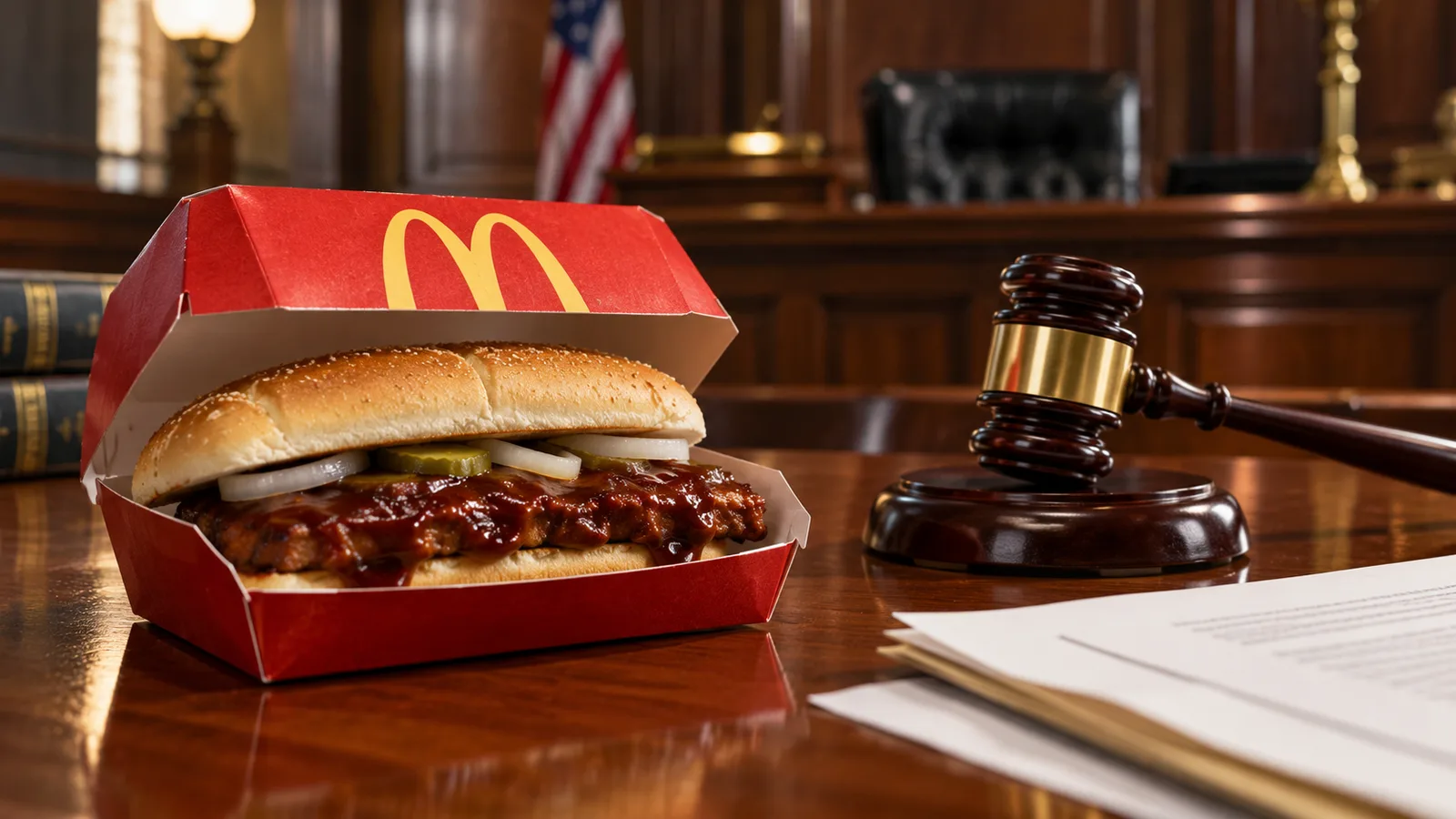
A federal judge in Chicago refused to dismiss a proposed class action accusing McDonald's of misleading customers about the meat in its McRib sandwich. Some claims were dismissed, but core allegations go forward. The ruling does not establish that McDonald's misled customers.
A federal judge ruled on Friday that McDonald's must face a proposed class action accusing it of misleading customers about the meat used in its McRib sandwich. US District Judge April Perry in Chicago rejected the request to dismiss the case in its entirety on October 30, although some claims were dismissed. She allowed core allegations of consumer deception, fraud and unjust enrichment to proceed, and dismissed five other claims without prejudice. Dismissal without prejudice means the plaintiffs may seek to bring those claims again.
What the lawsuit alleges
Four consumers sued McDonald's in December, alleging the McRib's name and rib-shaped patty suggest it contains pork rib meat. They say customers paid a premium for a sandwich allegedly made from less expensive cuts. The complaint claims the patty is made from restructured pork using lower-grade cuts, including shoulder, heart, tripe and stomach, rather than actual rib meat. Plaintiffs also accuse the company of intentionally shaping the patties with ridges to make diners believe the sandwich contains rib meat. McDonald's expressly denies using hearts, tripe or stomach in the McRib.
The judge's reasoning
Perry called it premature to accept McDonald's argument that no reasonable consumer could expect the McRib to contain rib meat. She described the plaintiffs' understanding of the name as not unreasonable or fanciful. According to Reuters, she noted customers should not be expected to research the ingredients of a fast-food sandwich before buying it. She said McDonald's website describes the sandwich only as containing pork, and that shoppers need not do research before buying a $7 sandwich. Perry also said advertisements highlighting the patty's rib-like shape could support a claim of intent to defraud, though further proof would be needed.
Responses and limits of the ruling
McDonald's rejects the accusations, says it has been transparent about its ingredients, and called the lawsuit a distortion of the facts and the claims meritless. Plaintiffs' lawyer Thiago Coelho said his clients will continue seeking accountability for deceptive marketing. The ruling does not establish that McDonald's misled customers or engaged in deceptive advertising, and the court has not certified a class action. It also does not establish that the sandwich contains the ingredients alleged in the complaint. The McRib has appeared periodically on McDonald's menus since 1981.