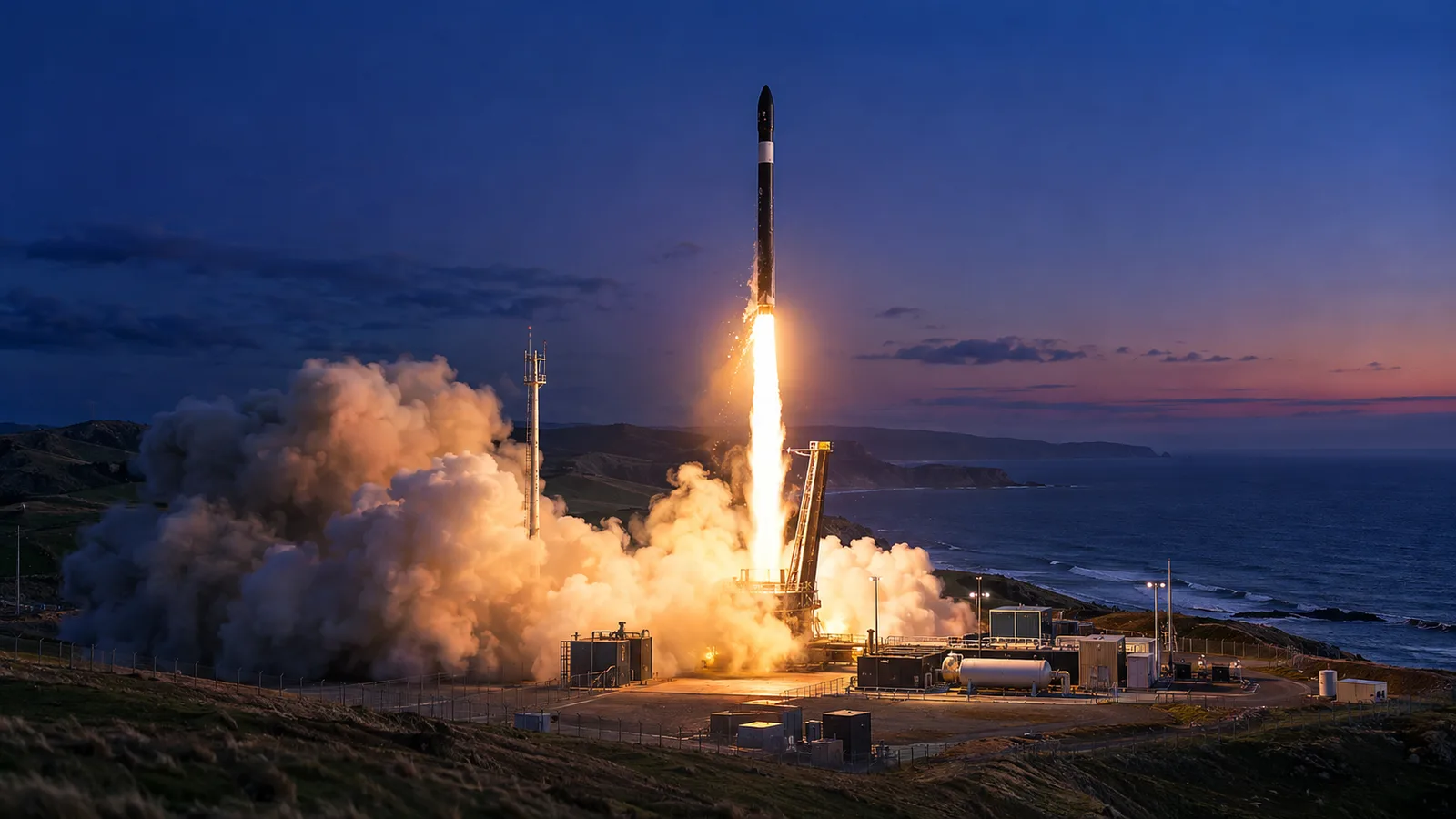
Rocket Lab launched an Electron rocket from New Zealand on Nov. 2, carrying a radar Earth-observation satellite for Japan's iQPS. The mission, "The Sea God Surveys," was the company's 99th launch and its 10th for iQPS, which is assembling a 36-satellite SAR constellation.
Rocket Lab launched its 99th mission on Nov. 2, sending a private Japanese Earth-observing satellite toward orbit. The mission, called "The Sea God Surveys," carried an Earth-observing radar satellite to low Earth orbit for the Japanese company iQPS. The satellite is a synthetic aperture radar Earth observation satellite for the Japanese Earth imaging company.
Launch details
Rocket Lab had scheduled the Electron launch for Monday, Nov. 2. The mission, designated iQPS Launch 9, was targeted for liftoff at 16:41 UTC from Launch Complex 1 on the Mahia Peninsula in New Zealand. An Electron rocket lifted off from the New Zealand site at 11:41 a.m. EST, which was 5:41 a.m. on Nov. 3 local time. Electron released the spacecraft at an altitude of 357 miles (575 kilometers), which Rocket Lab announced about 56 minutes after launch.
The iQPS constellation
The flight was Rocket Lab's 10th launch for iQPS. It was the tenth consecutive launch for iQPS with 100% mission success. iQPS is assembling a constellation of 36 SAR satellites in low Earth orbit. The latest Electron flight carried another satellite for Japan-based iQPS, supporting the buildout of that constellation.
Rocket Lab's launch tally
The launch was the 99th overall for Rocket Lab and the 90th for Electron. Electron has flown 17 times this year. Of the company's 99 launches, 90 were standard orbital Electron flights and nine used HASTE, a suborbital version of Electron. HASTE debuted in June 2023 and generally flies classified payloads.