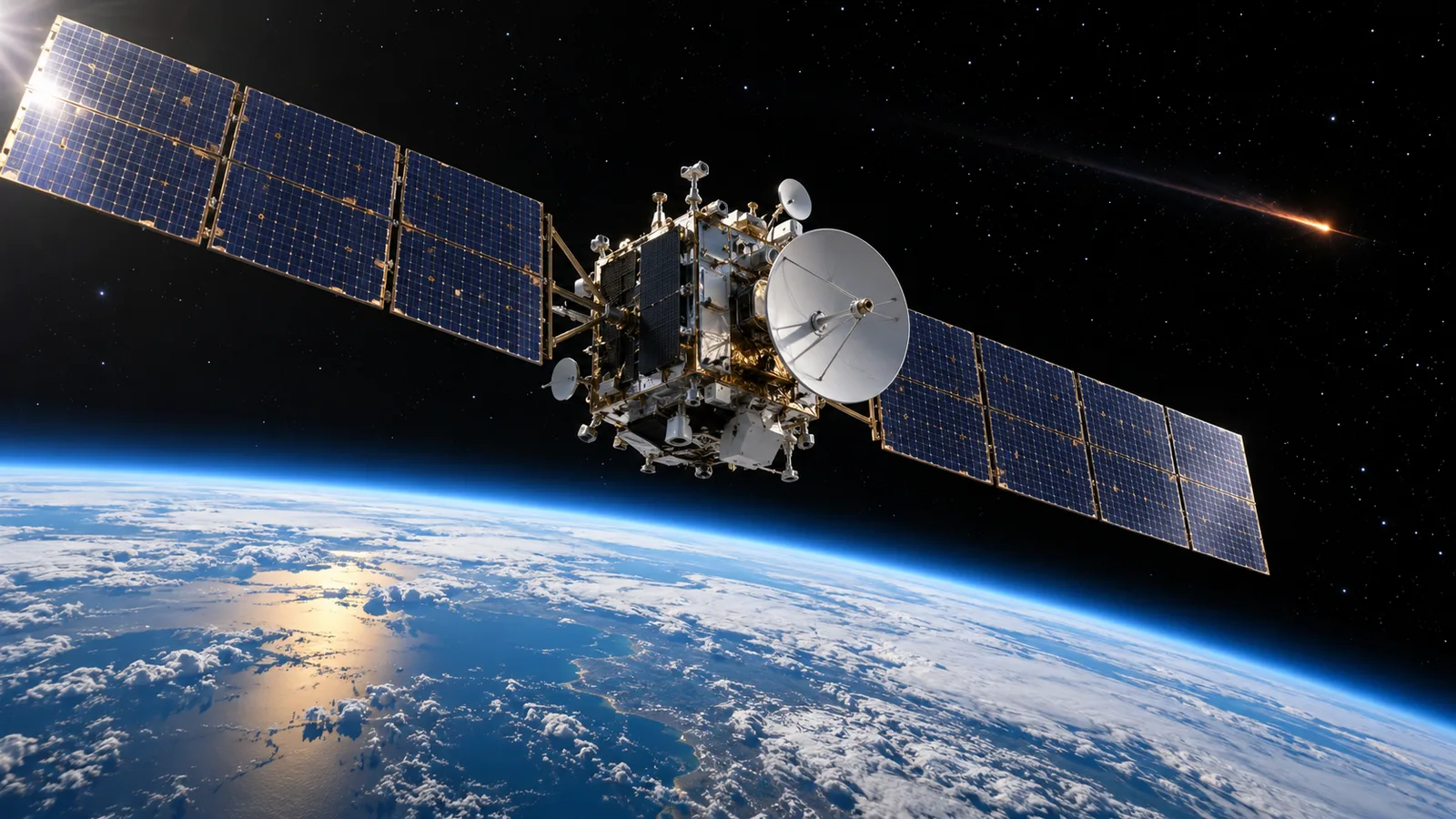
Rassvet-3 satellite No. 17, launched on July 19, burned up in the atmosphere on October 30 after apparently never activating its propulsion. It is the second satellite lost from Bureau 1440's Rassvet constellation, following No. 4 in June. Another satellite, No. 23, recovered and is climbing.
A second satellite from Russia's Rassvet constellation, developed by Bureau 1440, has fallen out of orbit and burned up in the atmosphere. Rassvet-3 No. 17, with NORAD ID 100083, reentered on October 30, about three months and 11 days after its July 19 launch aboard a Soyuz-2.1b rocket. It was part of a batch of 16 spacecraft launched from the Plesetsk Cosmodrome as the second batch.
The satellite reentered after its onboard propulsion failed to ignite. It apparently never performed orbital corrections, so atmospheric drag gradually lowered its altitude until it burned up.
The first loss was Rassvet-3 No. 4, with NORAD ID 68363, which reentered on June 6 after similar difficulties. It had launched on March 23 in the program's initial 16-satellite batch and was the first such loss without ever activating propulsion. In 2026 Russia has launched 16 Rassvet satellites on March 23 and another 16 on July 19, for a total of 32.
Rassvet-3 No. 23, from the same July batch, descended to about 220 kilometers. Controllers activated its thrusters on October 20, and it began raising its orbit. It had reached about 296 km by October 29, according to the Latitudinal monitoring project, and has since climbed to around 300 kilometers while still gaining altitude. It likely came close to the same fate as No. 17, but Bureau 1440 resolved its propulsion problems.
Of the 30 Rassvet-3 satellites still in orbit, 26 have reached approximately 500 kilometers, and another is approaching that altitude. They are holding around that altitude to spread along their orbital plane before a synchronized climb to the planned 800 km altitude. The satellites are already operational in test mode, and Bureau 1440 is testing communication terminals in remote regions of Russia.
Rassvet is a low-Earth orbit satellite internet system that Moscow presents as an alternative to Starlink. It is intended to provide communications including for military purposes such as controlling drones. Ground terminals tied to the network have been reported aboard strike drones deployed in the war in Ukraine. Russian authorities had announced plans for a 350-satellite constellation, expandable to 900, with commercial operations to start in 2027.